


### Blog Post:
Can dogs eat enoki mushrooms? This is a common question for pet parents who love sharing healthy foods with their dogs. While enoki mushrooms are popular in culinary dishes, their safety and benefits for dogs are more nuanced than most blogs reveal. Let’s break down the real science, risks, and safest ways to feed enoki mushrooms to dogs.
Key Takeaways
- Enoki mushrooms are classified as safe for dogs if served cooked and plain, but scientific studies in dogs are lacking.
- The main risks involve potential digestive upset or accidental ingestion of wild/toxic lookalikes, not enoki’s own toxicity.
- Start with small, cooked portions and monitor for any negative reactions; moderation and proper identification are key.
- What Are Enoki Mushrooms and Why Do Dog Owners Ask?
- How to Safely Feed Enoki Mushrooms to Dogs
- Advanced Analysis & Common Pitfalls
- Conclusion: Should Dogs Eat Enoki Mushrooms?
- FAQ: Can Dogs Eat Enoki Mushrooms?
What Are Enoki Mushrooms and Why Do Dog Owners Ask?
Enoki mushrooms (Flammulina velutipes) are long, thin white mushrooms popular in East Asian recipes and found in many grocery stores. Their crisp texture and mild flavor make them a staple in soups and stir-fries. Recently, some pet owners have considered adding enoki mushrooms to their dogs’ diets because of claimed immune and digestive health benefits.
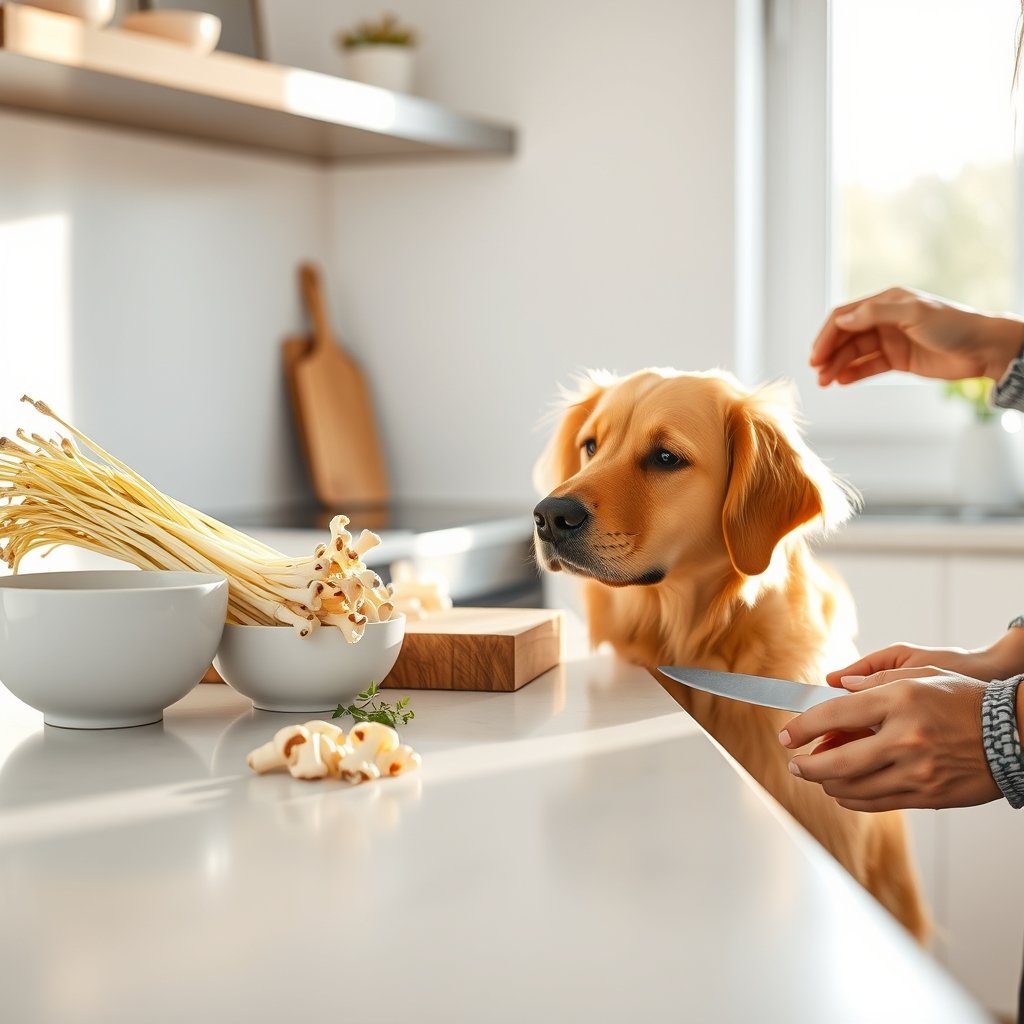
But here’s the catch: there are no published scientific studies or veterinary case reports directly examining if enoki mushrooms are safe or beneficial for dogs. (source). Most veterinary blogs cite enoki as “safe” solely based on human food safety profiles. This means that the practical safety and value for your dog come from a mix of nutritional reasoning and anecdotal reports, not rigorous dog-specific science.
Still, enoki mushrooms do not show evidence of containing the dangerous toxins found in many wild mushrooms, such as amanitin or muscarine [source].
So, should you feed enoki mushrooms to your dog? Only if they are store-bought enoki mushrooms, cooked, served plain, and you follow critical safety practices. Let’s look at exactly how to do so below.
How to Safely Feed Enoki Mushrooms to Dogs
If you want to let your dog try enoki mushrooms, there’s a safe method you should always stick to. Here’s a clear, actionable guide:
- Select only store-bought enoki mushrooms. Never let your dog eat wild mushrooms. Many mushroom poisonings happen due to accidental ingestion of toxic species that look harmless. Enoki mushrooms sold in supermarkets come from controlled environments and are not listed among toxic types for dogs. (source).
- Clean thoroughly and trim roots. Rinse with water, and trim any tough or discolored areas. This helps eliminate soil, bacteria, or potential pesticides.
- Cook fully—never feed raw enoki. Cooking softens the mushrooms, makes them easier to digest, and minimizes the risk of microbial contamination. Raw enoki may also contain compounds that have not been tested in dogs, and a 2014 study suggests anti-inflammatory properties decrease with heating, but these effects are only studied outside the dog context [source].
- Serve plain—no oils, seasonings, or sauces. Common additives like garlic, onion, or soy sauce are toxic to dogs. Always feed mushrooms by themselves.
- Offer a very small portion first. Start with a tiny piece—about the size of a fingernail. Watch for digestive upset (vomiting, diarrhea) or unusual behavior over the next 24 hours. Most non-toxic mushroom ingestion issues in dogs are digestive, not poisoning (source).
- Feed occasionally, not daily. Even with safe mushrooms, moderation matters. Too much fiber or new foods can disrupt your dog’s gut.
What to do if your dog has a negative reaction? If your dog vomits, has diarrhea, or acts lethargic after eating mushrooms—even enoki—offer water and skip the mushrooms in the future. For persistent symptoms, call your veterinarian immediately.
This cautious approach is similar to how you’d safely introduce other foods, like Honeycrisp apples or fava beans, where gradual testing is key.
Advanced Analysis & Common Pitfalls
Even though enoki mushrooms themselves aren’t known to be toxic to dogs, there are several real-world risks you need to avoid:
- Lack of Scientific Evidence for Dogs: There are no controlled studies confirming safety, health benefits, or toxicity for dogs. Most advice is based on indirect data and personal experience [source].
- Misidentification or Confusing Other Mushrooms: Wild enoki or similar-looking species can be dangerous. Poisonings often happen when pet owners (or dogs) mistake toxic wild mushrooms for edible varieties [UC Davis Vetmed].
- Digestive Upset Still Possible: Even with non-toxic store-bought mushrooms, a study of 421 dogs found that 22.8% had vomiting or diarrhea from ingestion, probably due to poor digestion or contamination (source).
- Lack of Preparation Guidance: Top articles rarely detail how to clean or cook enoki properly for dogs. Avoiding raw is important, but so is plain, oil-free preparation.
- No Dosing or Long-Term Data: There are no established portion sizes or research on effects of regular enoki consumption in dogs. Overfeeding may increase GI risks.
- Forgetting Individual Sensitivities: Dogs have unique reactions. One dog might handle a bite, another may react to even a cooked mushroom.
| Mushroom Species | Dog-Specific Studies? | Toxic Compounds | Typical Dog Risk | Is It Safe to Feed? |
|---|---|---|---|---|
| Enoki (Flammulina velutipes) | No | None detected | Possibly GI upset | Yes, cooked & in moderation |
| Amanita phalloides (Death cap) | Yes | Amanitin | Severe toxicity, death | No |
| Shiitake | No | None in dogs | Rare GI upset | Yes, cooked only |
| Oyster (store-bought) | No | None detected | Possible GI upset | Yes, cooked |
| Wild Mushrooms (varied) | Yes | Many toxins present | Severe GI/CNS/liver injury | NEVER |
Read more about what happens if dogs eat potentially risky proteins like teriyaki beef jerky for comparison on food testing and risk.
Enoki mushrooms are not toxic for dogs if they are cooked, store-bought, and offered in tiny portions without any added flavors. However, the lack of direct scientific studies on enoki and dogs means all advice is cautious and based on general food safety, not proven health benefits. Expect possible digestive upset and never substitute mushrooms for your dog’s main nutrition.
As with any treat, start small and stop if you see any negative reaction. When in doubt, talk to your veterinarian—especially if your dog eats mushrooms you didn’t prepare.
Looking for other healthy treats? Check out how Honeycrisp apples or Pepto Bismol work for dogs. Wondering “can a dog get a vasectomy?” Find answers in our vet-backed guide.
In summary: If you follow safe preparation, moderation, and pay attention to your dog’s response, you can safely let your pet try enoki. But the smart move is always to check with your vet first. Remember—can dogs eat enoki mushrooms? Yes, with caution.
Ready to try healthy, safe treats for your dog? Start with small amounts and always watch for their unique response to any new food!
FAQ: Can Dogs Eat Enoki Mushrooms?
Are enoki mushrooms toxic to dogs?
No toxic compounds have been identified in enoki mushrooms, and they are classified as safe in veterinary guides if cooked and served plain. Still, scientific studies directly in dogs are lacking.
What happens if my dog eats a raw enoki mushroom?
While raw enoki is not known to be toxic, it may be harder to digest and carry microbial risks or untested compounds. Some dogs may experience vomiting or diarrhea. Always cook enoki before feeding to dogs.
How much cooked enoki can I safely give my dog?
Veterinarians recommend starting with a very small piece (thumbnail size) and increasing only if no reaction occurs. There are no established portion guidelines, so moderation is essential.
Can I feed my dog enoki mushrooms from wild or home foraged sources?
No. Foraging can lead to toxic misidentification, as many wild mushrooms look similar but contain deadly toxins. Only use store-bought enoki mushrooms.
Do enoki mushrooms offer health benefits to dogs?
Enoki mushrooms are nutrient-rich in theory, but no dog-specific studies confirm special health benefits. Any immune or digestive perks are inferred from general mushroom nutrition, not canine-specific research.
—